Why Process-Integrated Materials Are the Future of Manufacturing
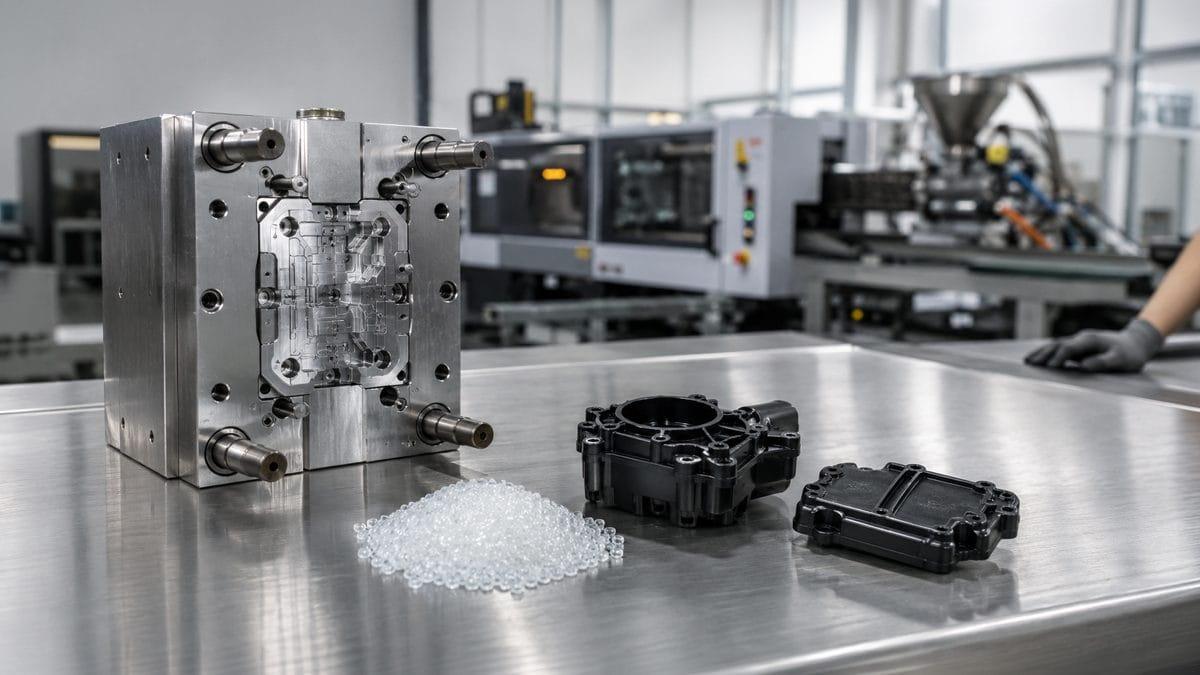
High-performance materials should no longer be evaluated solely based on laboratory properties. Instead, they must be designed with consideration for real manufacturing conditions, including flow behavior, pressure, cooling, shrinkage, and deformation. In processes such as injection molding, the interaction between material characteristics and process conditions directly affects final product quality and productivity. As a result, manufacturing competitiveness is no longer determined by superior material properties alone, but by how well stability, reproducibility, and process compatibility are secured in real production environments. In this context, this article defines such an approach as “Process-Integrated Material.”
Limitations of Conventional Material Design: Structural Issues of Spec-Based Approaches
Traditional material development has primarily focused on property metrics such as tensile strength, impact resistance, heat resistance, and modulus. While this spec-based approach is effective for evaluating intrinsic material performance, it has clear limitations in reflecting real manufacturing environments. In actual injection molding processes, multiple variables—such as flow behavior within the mold, cooling rate, pressure distribution, and shrinkage—interact simultaneously. The interaction between these process variables and material properties directly impacts final product quality and productivity. [1] As a result, spec-oriented materials tend to be highly sensitive to process variations, leading to increased production variability and reduced yield.
Conflict Structure Between Process Variables and Material Variables
In manufacturing, material variables and process variables do not exist independently; rather, they form an interdependent system. For example, materials with high viscosity can cause flow imbalance during mold filling, leading to short shots or surface defects. Conversely, increasing process temperature may improve flowability but can result in reduced thermal stability or material degradation. [2] Such subtle imbalances between material and process are amplified in mass production environments, ultimately affecting yield and overall cost structure.
Defining Process-Integrated Materials
Process-Integrated Material refers to an approach in which material design is developed in parallel with the actual manufacturing process. Rather than simply creating materials with superior properties, the objective is to ensure optimal performance and productivity under specific process conditions. The core principle is to tune material characteristics based on process data and design structures that can absorb process variability. This enables stable and reproducible production performance, ultimately maximizing manufacturing efficiency.
AM Solution’s Approach: Data-Driven Process Synchronization
AM Solution defines materials not merely as products, but as process optimization solutions. From the molecular design stage, properties such as melt flow behavior, temperature sensitivity, and viscosity stability are tailored to match the customer’s actual process conditions. The company applies a mold-optimized design approach that considers in-mold behavior. This methodology enables stable production even under fluctuating process conditions, minimizes batch-to-batch variation, and ensures consistent quality.
Customer Value: Yield, Cost, and Production Stability
The primary value of Process-Integrated Materials lies in productivity improvement. Materials optimized for specific processes reduce defect rates, shorten cycle times, and enhance process stability. These improvements directly translate into cost reduction and enable higher productivity from the same equipment. In mass production environments, even minor differences in process stability can significantly impact the overall cost structure. Process optimization and smart manufacturing contribute to improvements in production volume, productivity, and equipment utilization, ultimately leading to cost efficiency. According to a 2025 Deloitte study, the adoption of smart manufacturing has resulted in average improvements of 10–20% in production output, 7–20% in workforce productivity, and 10–15% in capacity utilization. [3]
The Changing Standard of Manufacturing Competitiveness
The materials industry is shifting from a property-centric paradigm to a manufacturing performance-driven paradigm. Future competitiveness will no longer be determined by how advanced a material’s properties are, but by how reliably those properties can be realized in actual production environments. Process-Integrated Materials represent a key concept in this transition, and AM Solution presents a new manufacturing paradigm that connects materials and processes.
References
[1] McKinsey & Company, ndustry 4.0/advanced manufacturing
https://www.mckinsey.com
[2] Donald G. Baird & Dimitris I. Collias, Polymer Processing: Principles and Design, Elsevier
https://www.sciencedirect.com
[3] Deloitte, Smart Manufacturing and Operational Efficiency
https://www2.deloitte.com
What are the limitations of traditional spec-based material design in manufacturing?
Spec-based materials are evaluated on laboratory properties like tensile strength and heat resistance, but fail to account for real process variables such as flow behavior, pressure distribution, and cooling rate. In actual injection molding, this leads to increased production variability and reduced yield.
How do material variables and process variables interact in injection molding?
Material and process variables form an interdependent system. High-viscosity materials can cause flow imbalance and surface defects, while elevated process temperatures may improve flowability but risk thermal degradation. These imbalances are amplified in mass production, directly affecting yield and cost.
What does "Process-Integrated Material" mean?
Process-Integrated Material refers to materials designed in parallel with actual manufacturing processes—not just for superior properties, but for optimal performance under specific process conditions. The goal is to tune material characteristics based on process data and build in the ability to absorb process variability.
How does AM Solution synchronize material design with customer processes?
AM Solution tailors melt flow behavior, temperature sensitivity, and viscosity stability to match each customer's actual process conditions from the molecular design stage. This mold-optimized approach minimizes batch-to-batch variation and ensures consistent quality even under fluctuating process conditions.
What productivity gains can manufacturers expect from process-integrated materials?
Process-integrated materials reduce defect rates, shorten cycle times, and enhance process stability—translating directly into cost reduction. According to Deloitte (2025), smart manufacturing adoption has delivered 10–20% improvements in production output, 7–20% in workforce productivity, and 10–15% in capacity utilization.